About
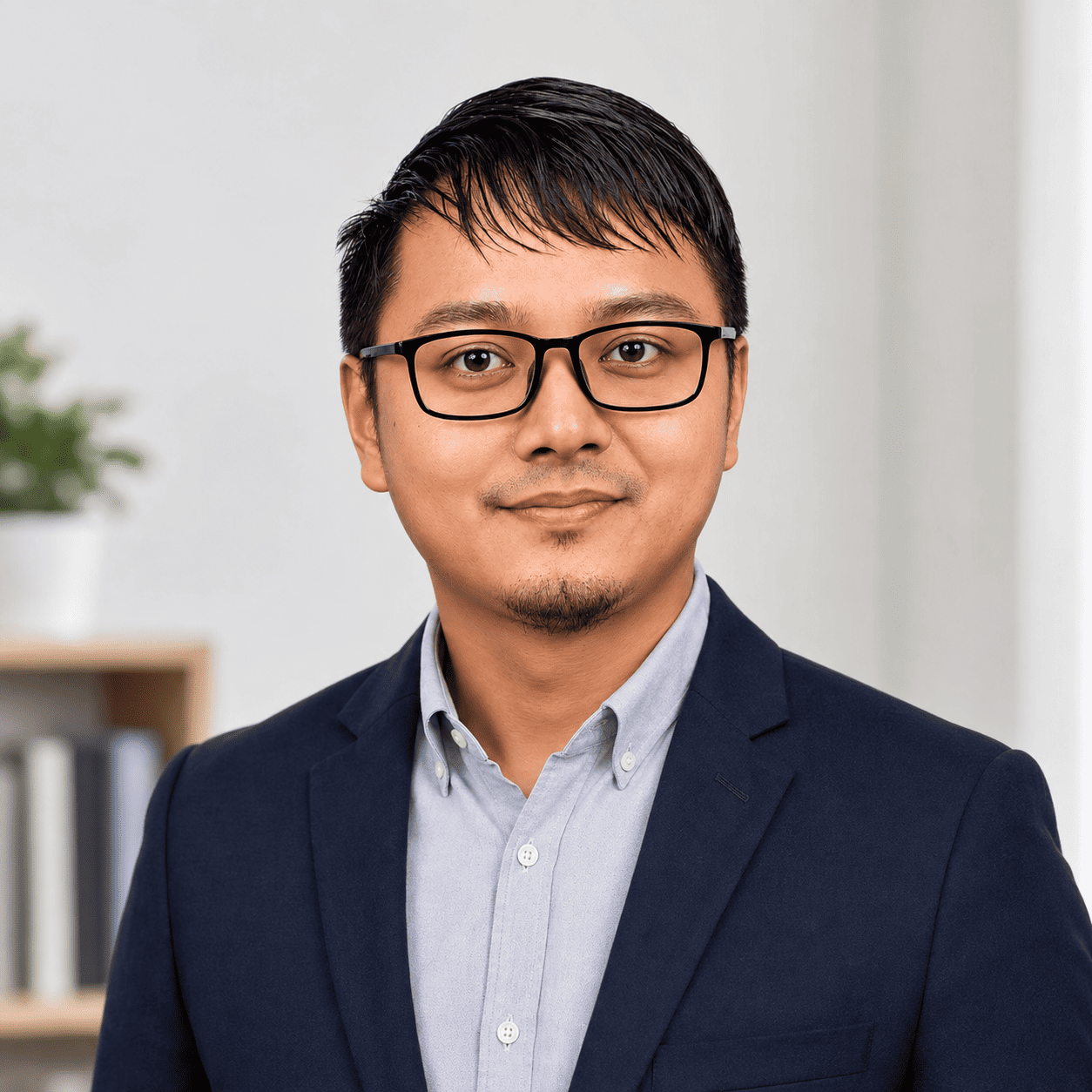
Nazrul Hisham Nazaruddin — Research Officer
Proteomics Laboratory
Biotechnology & Nanotechnology Research Centre
Malaysian Agricultural Research and Development Institute (MARDI), Serdang, Selangor
What I do
I work in a team using genome editing to make Malaysian crops more nutritious and Malaysian agriculture less import-dependent — and to make sure what comes out the other end can clear regulatory review.
The unglamorous truth about CRISPR in plants is that the editing chemistry is the easy part. The hard parts are delivery (getting the machinery through a cell wall), detection (proving an edit happened and nothing else did), and regulation (demonstrating all of that to a biosafety committee). Much of our research sits in those three — but the reason for doing it is what ends up on a plate.
Our current editing project is a lycopene-rich tomato: knocking out SGR1 and CYC-B in MT-3, a Malaysian lowland variety, to push carotenoid flux toward lycopene and raise the fruit's nutritional value without importing a variety bred for somewhere else. In parallel we are expressing phytase in E. coli as a potential feed additive — the enzyme that unlocks the phosphorus otherwise wasted in plant-based animal feed, currently imported, and a small concrete piece of Malaysia's food sovereignty.
On the methods side, since 2021 I have led work on optimising protoplast isolation and transfection in Malaysian rice cultivars — a fast, honest way to test whether a guide construct works before committing months to regenerating whole plants. That work won Best Poster at the Malaysian Society of Plant Physiology Conference in 2025.
For my master's I went further upstream, to DNA-free delivery: using microneedle arrays to deliver Cas9 ribonucleoprotein directly into rice, so no foreign DNA is introduced and nothing has to be bred back out. That research was carried out at AIST Tsukuba while I was enrolled at the Tokyo University of Agriculture and Technology on a MEXT scholarship.
Across a decade at MARDI our group has also worked on transgenic rice for sheath blight resistance, papaya engineered against dieback disease, marker-free positive selection systems, and the de novo transcriptome of Terengganu cherry — plus the NGS and RT-qPCR analysis that underpins most of it. More on the research →
How I got here
I studied Biochemistry & Molecular Biology at Michigan State University, with a second major in Genomics and Molecular Genetics, and spent my final year in the Schemske lab crossing Arabidopsis ecotypes for QTL mapping of freezing tolerance. I joined MARDI in 2013 as a proteomics research assistant working on papaya dieback, and became a Research Officer the following year. In 2022 I left for Japan and the M.Eng. at TUAT, returning in 2024.
Along the way I have picked up work that sits outside the lab: liaison officer during Malaysia's APEC 2020 host year, representative to the APEC High Level Policy Dialogue on Agricultural Biotechnology, special officer to the Chairman of the MARDI Governing Board, and duty officer for the Ministry at Parliament. Agricultural biotechnology is not decided in the lab alone, and it has been useful to see the other rooms.
Biosafety
I completed the Malaysian Biosafety Officer Training (MABOT 3) and was certified as a Registered Biosafety Professional (RBP0030/2017) by the Malaysian Biosafety and Biosecurity Association — a five-year certification that has since lapsed and is pending renewal. I have served on MARDI's Institutional Biosafety Committee since 2015, plus four years on the Biorisk Management Committee. Genome editing in Malaysia sits under the Biosafety Act 2007, and I have taken projects through institutional notification, contained glasshouse evaluation, and confined field trials. An edit that cannot clear regulatory review is a result, not a crop.
Teaching tools
Genome editing has a teaching problem: the concepts are visual and stepwise, but most software is either a black box or a command line. So this site hosts small browser-based tools that show the intermediate steps — where the guide anneals, where Cas9 cuts, what the repaired sequence looks like. They run entirely client-side, which means no install, no account, and no sequence ever leaving the user's machine. I use them when supervising students, and anyone else is welcome to. See the tools →
Beyond my own bench
I am currently the focal point for MARDI on the National Biotechnology Symposium (NBS) 2026, which MARDI is co-organising. I review for international journals — most recently The Plant Genome (Wiley) in May 2026, and eight reviews in 2024 for Plant Nano Biology and Plant Physiology and Biochemistry — and have served on the scientific and technical committees of the MSPP conferences, the National Conference on Precision Biotechnology in Agriculture, and the Regional Corn Conference. Since 2020 I have supervised five student placements at MARDI — from UPM, UPSI, a vocational college, and one international student from Universitas Muhammadiyah Sumatera Utara in Indonesia — in molecular cloning, tissue culture and RT-qPCR, which remains the most reliably enjoyable part of the job. I have also been an invited speaker at the MSPP Genome Editing Workshop (2025) and MARDI's Institutional Biosafety Committee Refresher Course (2022 and 2026).
Collaboration
We are glad to hear from people working on plant genome editing, delivery methods, recombinant protein expression, or agricultural biosafety — whether that is a joint project, a student placement, or a question about one of the tools. The contact page has the details, and the CV has the full record.